

Structured data.
Connected tumour boards.
Faster decisions.
Stop losing clinical hours to manual data entry.
From documentation and tumour boards to systemic therapy planning, quality indicators and EUnetCCC preparation.
Trusted by oncology teams in 350+ hospitals across Europe.
Oncology is too Complex for Disconnected Tools.
One oncology platform. One shared workflow.
c37.CancerCenter provides a central Oncology Information System for hospitals, cancer centres and oncology networks.
It connects structured oncology documentation, multidisciplinary decision making, follow up, cancer registry reporting, quality management and analytics on one reusable oncology data foundation.
Existing hospital systems remain part of the infrastructure. c37 connects the information required for oncology workflows instead of replacing established HIS, RIS, PACS, laboratory, pathology or therapy systems.
For clinical teams
A structured longitudinal view of diagnoses, findings, treatments, tumour board decisions and follow up.
For tumour boards
A complete digital workflow from case registration and preparation to documented recommendations and the final approved protocol.
For quality management
Structured routine data that can be reused for quality indicators, certification preparation and continuous evaluation.
For hospital IT
An integration ready oncology platform that connects with existing clinical and archive systems.
For management
A clearer view of oncology performance, quality indicators and cross department workflows to support strategic development and certification preparation
One longitudinal oncology record across the complete patient pathway
A complete and structured longitudinal patient record is the foundation for connected oncology care.
c37.CancerCenter brings diagnoses, pathology, imaging, therapies, multidisciplinary decisions, outcomes and follow up together in one continuous oncology record.
Information captured during routine care can then be reused across clinical workflows, quality management, cancer registry reporting, certification preparation, research and analytics.
Relevant for EUnetCCC: creates a structured and traceable data foundation across the oncology patient pathway.
Key capabilities
Structured and traceable multidisciplinary decision making
Multidisciplinary care is a central part of modern cancer centre structures.
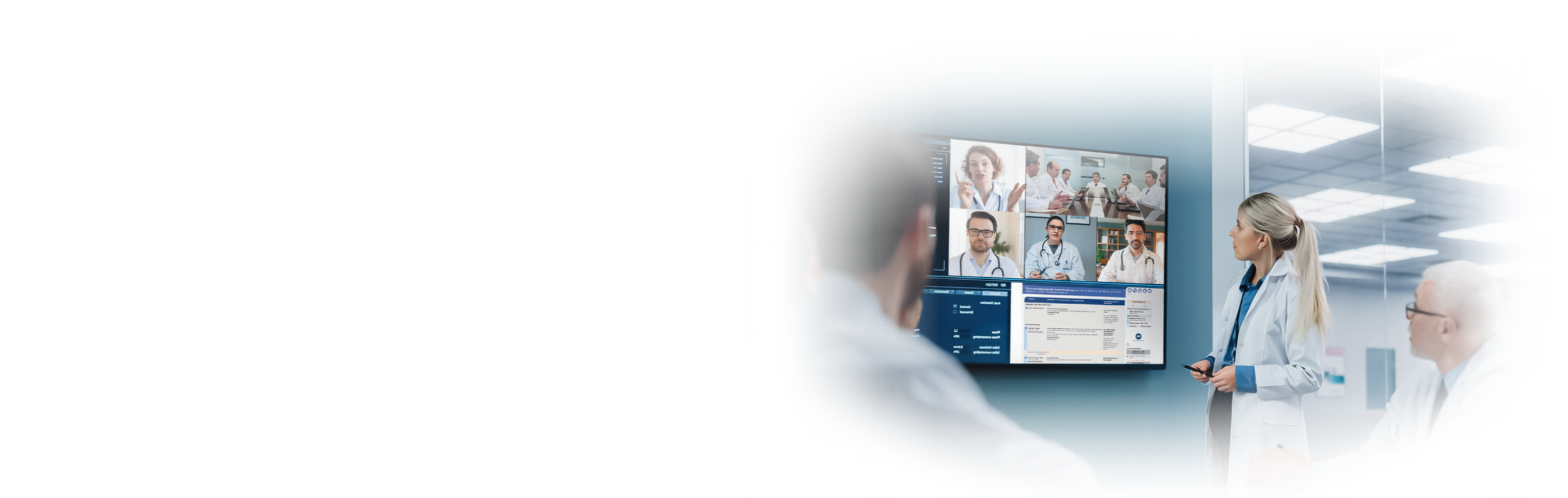
c37.TumorBoard supports the complete workflow from case registration and preparation to multidisciplinary discussion, recommendation and final protocol.
Relevant clinical information is available before and during the conference, while decisions remain connected to the patient's longitudinal oncology record.
Relevant for EUnetCCC: supports structured, multidisciplinary and traceable clinical decision processes.
Key capabilities
Make oncology quality continuously measurable
Quality should not become visible only shortly before an audit.
Structured routine data allows cancer centres to monitor processes, indicators and outcomes continuously and identify missing information or improvement potential earlier.
c37.OncoInsights uses structured oncology data for dashboards, quality indicators and comparative analyses.
Relevant for EUnetCCC: helps cancer centres demonstrate quality using structured data from everyday clinical workflows.
What this enables
Connect existing hospital systems without adding complexity
Connected oncology workflows do not require hospitals to replace their existing IT landscape.
c37.CancerCenter and c37.TumorBoard are designed to integrate into established hospital environments and connect the information required for oncology workflows.
Patient and case data can be transferred from existing systems into structured oncology documentation and tumour board processes. Final recommendations and protocols can be returned to the HIS, EHR or archive.
Existing RIS, PACS, laboratory, pathology and therapy systems remain in use.
Relevant for EUnetCCC: enables connected oncology processes across departments and systems without requiring a complex replacement of the existing IT infrastructure.
Integration possibilities
Proven Excellence. Trusted by Leading Oncology Centers.
“A high-performance tool that helped us revolutionize our processes.”
— Nina Burkhart
Hematology & Oncology, Asklepios Tumorzentrum Hamburg
"Data export for certifications is seamless... the team is always approachable and quick with solutions."
— Dr. med. habil. Gregor A. Stavrou
Chief Physician, Klinikum Saarbrücken
"Evaluations and preparation for certification audits are clear and user-friendly."
— Barbara Skudelny
Tumor Documentation, St. Elisabeth Gruppe
Your path to implementation –
in three clear steps

-
Preparation for the desired operating model (on-premise, rental solution or private cloud)
Individual configuration of the system
Mapping your specialist modules, roles and processes
-
HIS connection and interface testing
Data transfer, if required
User training and testing under real conditions
-
Structured production start with technical support
Support in real operation
Continuous optimization and accompanied stabilization

Explore a connected workflow for tumour boards and therapy planning
See how structured clinical oncology data supports tumour boards, Systemic Therapy planning, and ECC (EUnetCCC) Quality Indicators in daily practice.